How to price items for an estate sale
Before you price anything
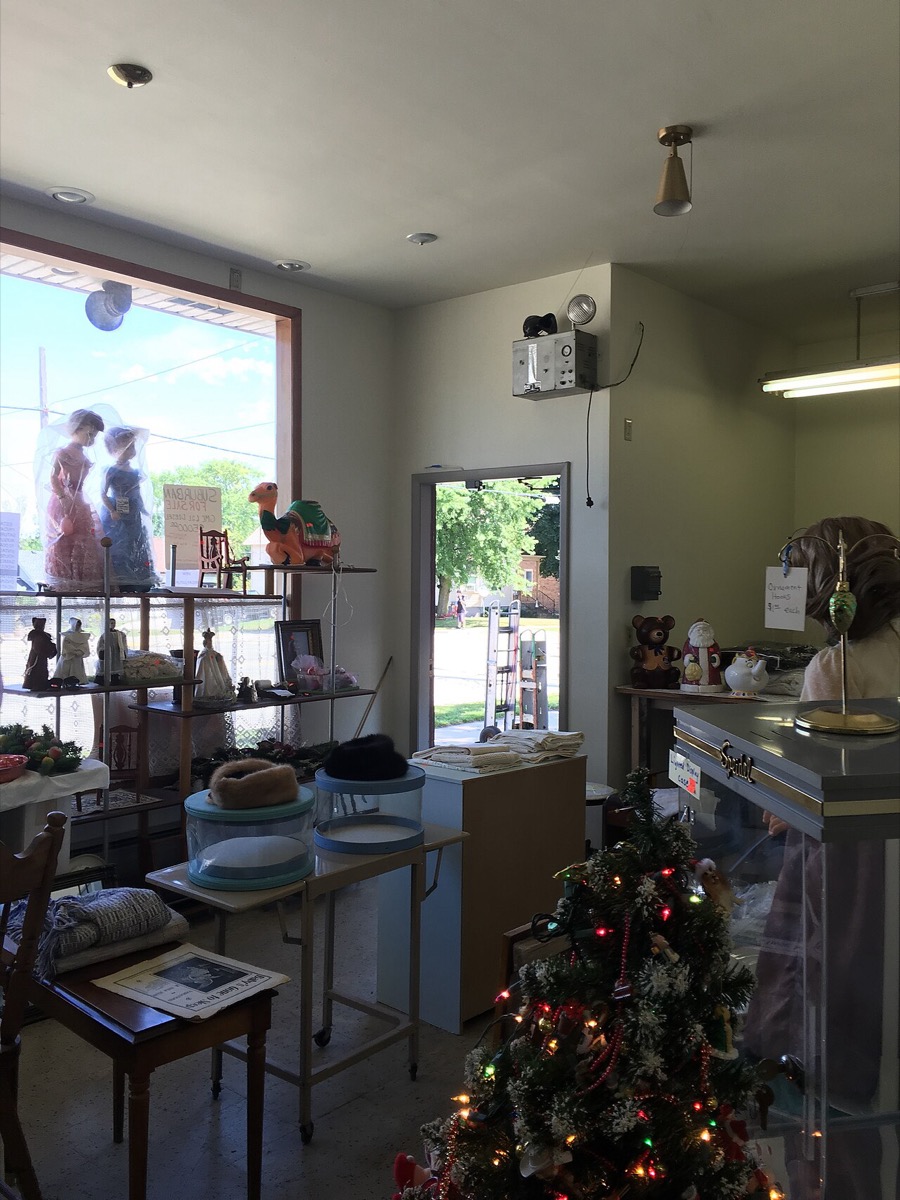

Take out everything the family wants to keep, and anything you're not sure about, before the first tag goes on. Consumers' Checkbook warns that many estate sale contracts say that once signed, everything in the house is for sale.
Then set aside the things that need a closer look before they get a price:
- Anything that might be gold or silver: jewelry, flatware, trays, cases. Check the gold stamps and silver hallmarks; the metal alone sets a minimum.
- Watches, especially mechanical ones. See how to tell if a watch is fake.
- Coins and stamps. Start with what an old coin is worth.
- Signed paintings and prints, and Asian ceramics.
- Pottery and china with a mark on the bottom. The pottery marks guide helps you read them.
- Old cast iron pans with a maker's name cast into the bottom. Rare sizes and early marks sell for hundreds of dollars or more; see Griswold vs Wagner.
Everything else, the furniture, kitchenware, linens, books and tools, can be priced quickly once you know where to look.
Price from sold prices, not from memory
The IRS defines fair market value as the price a willing buyer and a willing seller would agree on, neither being forced to act and both knowing the relevant facts. It also says plainly that used household items are usually worth much less than they cost new, and may be worth little or nothing if they're out of style. That is the number you want on the tag: what a buyer pays today, not what your relatives paid.
The best evidence is what the same item has sold for recently:
- Search eBay for the maker and model or pattern, then turn on the Sold Items filter. Asking prices only show what sellers hope for.
- Compare items in the same condition. A chip, a missing lid or a watch that doesn't run changes the price.
- Look at several sales, not the highest one. One lucky sale isn't the market.
- For ordinary things, Checkbook suggests also checking prices at other estate sales nearby and on Facebook Marketplace.
How far under online prices to go
Estate sale buyers pay cash, carry the item home themselves, and many are dealers who need room to resell. So a tag usually sits below what the same thing sells for online. Companies differ on how far:
- EstateSales.org's pricing guide says items should never be priced at retail, at current online sale prices, or at what an antique shop would charge.
- True Legacy Homes, an estate sale company, tells sellers to expect to charge 10 to 30 percent less than the item fetches at most on eBay or in an antique shop.
Treat those as starting points. A piece that sells online every day can sit close to its sold price; a bulky one that is hard to ship belongs further under it.
Build the discount days into the tag
Almost every estate sale cuts prices as it goes on. Checkbook gives a typical schedule for a Friday-to-Sunday sale:
| When | Typical reduction | What a tag is down to |
|---|---|---|
| Friday | None | Full price |
| Saturday morning | 25 percent off | Three quarters of the tag |
| Saturday afternoon | 50 percent off | Half the tag |
| Sunday | 75 percent off | A quarter of the tag |
Other companies are gentler. EstateSales.org quotes one Michigan company that opens the second day at 25 percent off and the third at 50 percent off, and an Arizona company that cuts 25 percent at half past noon and another 25 percent at three. That Arizona company never takes fine jewelry, precious metals, coins or certain art below 25 percent off.
Two things follow. Put the price you'd be happy with on the tag, because EstateSales.org's aim is to sell many items on the first day at full price, before any discount. And mark the pieces that must not be discounted, such as gold, silver and anything you've had checked, as firm, or don't put them in the sale at all.
Rather check yours from a photo? Worthzy identifies the piece, screens it for fakes and shows a price range from matching listings, in seconds.
Get Worthzy on the App StoreWhat ordinary things actually sell for
These are individual eBay sales listed by the price tracker Underpriced AI, from pages updated between September and November 2026. We couldn't check them against eBay directly, so treat them as a guide. They are online prices; at an estate sale, expect to tag below them.
| What sold | Sold | Price |
|---|---|---|
| Fire-King milk glass custard cup, 6 oz | Oct 26, 2026 | $6.26 |
| Fire-King white milk glass gravy boat | Oct 26, 2026 | $6.74 |
| Hummel Puppy Love, Hum 1, 5 inch, excellent condition | Oct 18, 2026 | $10.80 |
| Seiko 5 automatic, ref. 6119-5401 | Nov 1, 2026 | $34.19 |
| Fire-King Jane Ray Jade-ite cups and saucers, set of 8 | Sep 16, 2026 | $107.97 |
| Seiko 5 Sports 6119-8450, blue dial, running well | Nov 1, 2026 | $155 |
The same tracker put the typical sale of a Hummel Puppy Love at $17.99, with half of 52 sales between $12 and $25, and the typical CorningWare Cornflower A-1 1/2-B casserole at $18 from 216 sales, against about $23 asked. Most of a house sells for small sums like these; the money is usually in a few pieces. Our guides to Fire-King, Hummel figurines, CorningWare and vintage Seiko have more sales for each.
We couldn't find dated, checkable sales for everyday furniture, linens or tools, so we give no figures for them. Look up the maker and model, or compare with other sales in your area.
Pricing by kind of item


| Kind of item | How to price it |
|---|---|
| Gold, silver, coins | Never below the metal value. Price individually, mark firm or keep out of the discounts. |
| Watches and jewelry | Individually, from sold prices for the same model. Keep them in a case near the cashier. |
| Marked pottery, glass, figurines | By maker, pattern and mark, from sold prices. Check for chips first. |
| Common kitchenware and glasses | By the box or table, not piece by piece |
| Books, linens, small tools | One price per kind, or a fill-a-bag price on the last day |
| Furniture | From local sales of similar pieces; bulky items sell below online prices because they have to be carried away |
| Clothing | The IRS treats what thrift and consignment shops actually charge as a fair guide to used clothing |
Doing it yourself or hiring a company
Most estate sale companies price everything for you. Checkbook says they usually take 30 to 50 percent of what sells, often on a sliding scale: a company that takes 40 percent on a small estate of $3,000 to $5,000 might take 30 percent on a large one. Minimum fees of $500 to $3,000 are common. As a rough guide, Checkbook says a house with $3,000 or more in furnishings and other goods merits an estate sale.
Before you sign, ask what the fee covers, whether leftovers are hauled away or donated and at what cost, how the sale is advertised, whether the company is insured, and when you'll be paid. If time is short, some operators offer a buyout: one agreed price for everything, and they take it all away.
When to get an appraisal
The IRS's household-items rules leave out paintings, antiques, art, jewelry, gems and stamp and coin collections, because those don't follow ordinary used-goods prices. If the house has any of them, ask a specialist before the sale. The American Society of Appraisers has a directory you can search by type of property.
If you plan to donate rather than sell, the IRS requires a qualified appraisal for any item or group of similar items claimed at more than $5,000.
How to check what yours sells for
- Photograph each item and any mark, label or signature on it.
- Search eBay for the maker and model or pattern, and filter by Sold Items. Ignore asking prices.
- Compare items in the same condition, and take the middle of several sales.
- Tag below that, knowing the price will fall on the later days.
- Still sorting the house? Start with how to value inherited antiques.
Sources
- Estate Sales, Consumers' Checkbook
- Publication 561: Determining the Value of Donated Property, Internal Revenue Service
- The Ultimate Estate Sale Pricing Guide, EstateSales.org
- Estate Sales Pricing Guide, True Legacy Homes
- Find an Appraiser, American Society of Appraisers
- Hummel Puppy Love sold price guide, Underpriced AI
- Fire-King Harvest Amber casserole sold price guide, Underpriced AI
- Fire-King Jane Ray Jade-ite sold price guide, Underpriced AI
- CorningWare Cornflower Blue A-1 1/2-B sold price guide, Underpriced AI
- Vintage Seiko 5 automatic 7009-8210 sold price guide, Underpriced AI
Related guides
Pricing a whole house?
Photograph each piece and any mark on the bottom or back. Worthzy identifies it and values it from comparable listings, so you can see quickly which items to tag low and which to check before the sale.
Get Worthzy on the App StoreWorthzy gives estimates and an authenticity screening, not a certified appraisal. For anything valuable, have a qualified specialist examine it in person.