Vintage Seiko value: what your watch really sells for
Why most vintage Seikos are worth modest sums

Seiko made watches in huge numbers for every budget. The company began as Kintaro Hattori's watch and clock shop in Tokyo in 1881, launched Japan's first wristwatch, the Laurel, in 1913, and put the Seiko name on a watch for the first time in 1924. By the late 1960s it was setting up sales companies around the world and making watches at every price level.
The Seiko 5 is the one most people inherit. Seiko introduced the Sportsmatic 5 in 1963 as Japan's first automatic day-date watch, and the "5" stood for five promises: an automatic movement, the day and date at three o'clock, water resistance, a recessed crown at four o'clock, and a durable case and bracelet. Seiko 5 Sports followed in 1968. A working vintage one usually sells for tens of dollars, not hundreds.
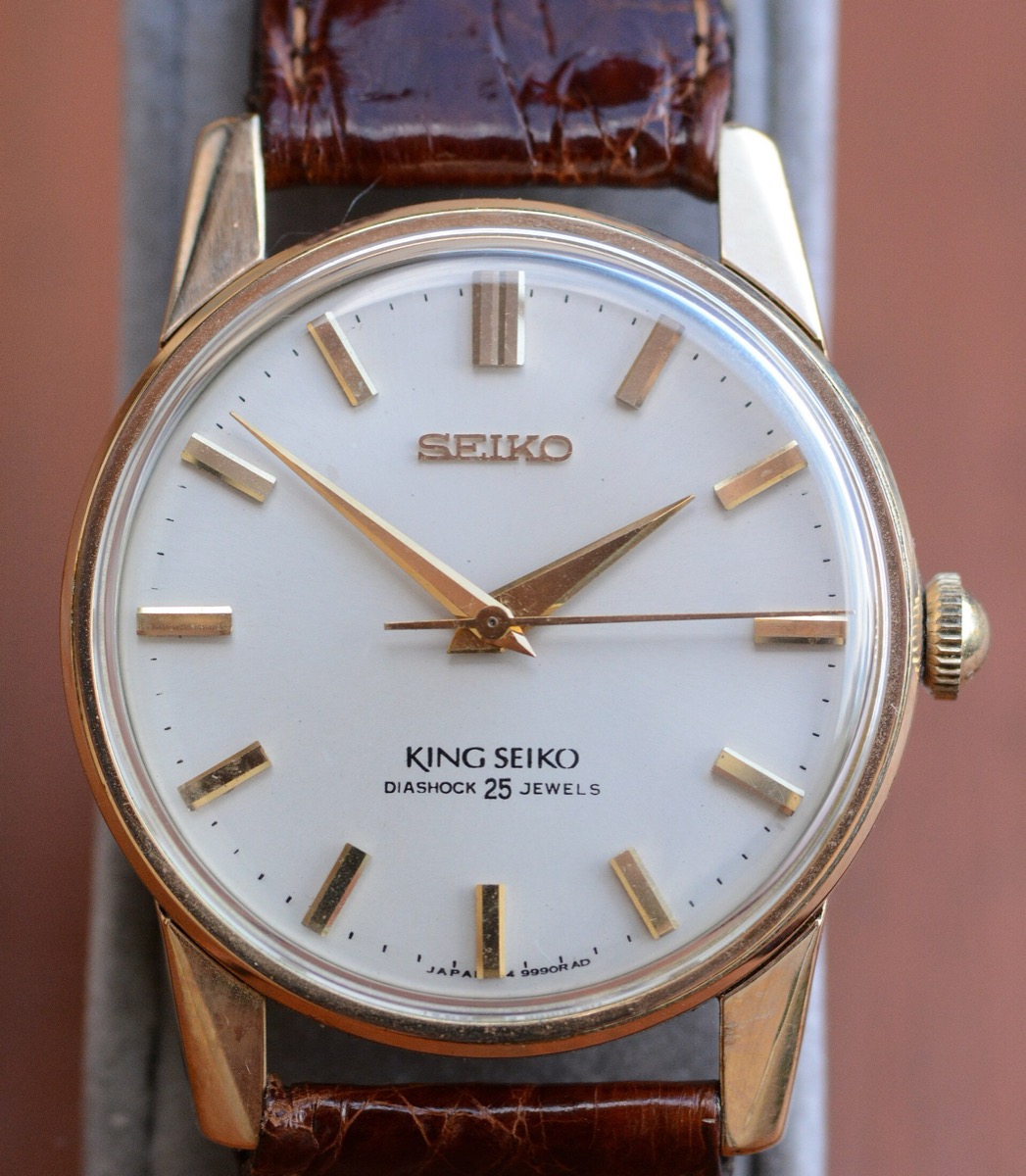
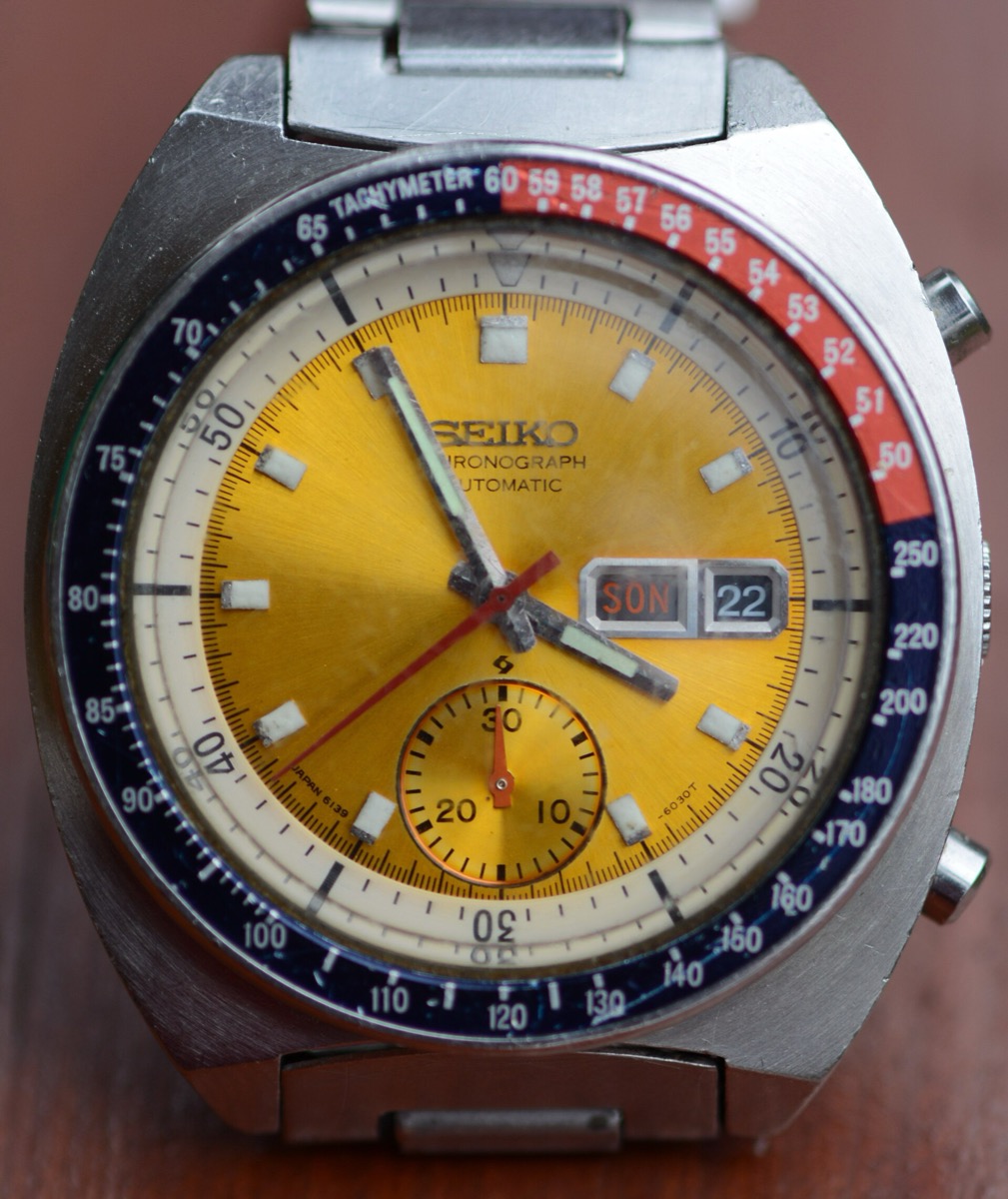
A few lines are different. Grand Seiko (1960) and King Seiko (1961) were Seiko's luxury watches, and the first King Seiko cost about as much as a new university graduate's starting salary. The 6139 automatic chronograph of 1969 and some gold-cased Grand Seikos now sell for thousands at auction.
Read the back of the case
Almost every Seiko since the early 1960s has the same information stamped on the caseback. The collector site Plus9Time explains it, starting from a 1969 Seiko factory magazine:
| What you see | What it means |
|---|---|
| Two groups of digits joined by a dash, such as 6309-8230 or 6139-6002 | The case number. The first part is the calibre (the movement), the second the case design. Together they identify the model. |
| Six digits on their own, such as 652290 | The serial number. The first digit is the year, the second the month. |
| A lightning-bolt or swirl logo near the Seiko name | The factory: lightning bolt for Daini Seikosha in Tokyo, swirl ("typhoon") for Suwa Seikosha. The same logo appears on the dial. |
| "Water Proof" or "Water Resist" | Seiko changed from Proof to Resist around 1970, because of US rules. By 1971 almost every model said Resist. |
| STAINLESS STEEL | A steel case |
| SGP, or BASE METAL with a steel back | Gold-coloured plating over base metal, not gold |
| GOLD FILLED | A layer of gold bonded to the case |
| 14K or 18K | A solid gold case. For what the gold alone is worth, see gold jewelry stamps. |
Search the case number in quotation marks to find photos of the same model and see whether yours still looks as it left the factory.
How old is my Seiko? Date it from the serial
On six-digit serials, the first digit is the last digit of the year and the second is the month: 1 to 9 for January to September, 0 for October, N for November and D for December. The remaining four digits are a production number.
- A 7005-8062 with serial 652290 was made in May 1976.
- Colonel William Pogue's 6139 chronograph has serial 190945, so its case was made in September 1971.
- The earliest known 6139, sold at Phillips in 2025, has serial 910148: January 1969, the 148th made that month.
The year digit repeats every ten years, so you need the decade from somewhere else. The calibre usually settles it, because most Seiko movements were made for less than ten years, and the styling helps. Seiko used six-digit serials from 1966; earlier watches, and some made up to 1969, have seven digits, and some of those put the month first. The format doesn't apply to the Seiko 5 Sports models launched in 2019, which carry a newer, stylised "5" logo.
Which vintage Seikos collectors look for

| Line | Launched | Why it matters |
|---|---|---|
| Grand Seiko | 1960 | Seiko's top line, built to the highest accuracy standard of its day. Gold cases bring the most. |
| King Seiko | 1961 | Luxury line from the Daini factory; the first had a 25-jewel hand-wound movement |
| Sportsmatic 5 / Seiko 5 | 1963 | Japan's first automatic day-date. Very common. |
| Diver's watches | 1965 | Seiko made the first Japanese diver's watch this year |
| Lord Matic | 1968 | Automatic line, popular through the 1970s |
| 6139 Speed-Timer chronograph | 1969 | One of the first automatic chronographs; the yellow-dial version is called the "Pogue" |
The "Pogue" name comes from Colonel Pogue, who took his own 6139 on the Skylab 4 mission from November 1973 to February 1974, making it one of the first automatic chronographs to fly in space. Collectors argue over details: Plus9Time and Beyond the Dial both show that his watch was the US-market 6139-6005, not the 6139-6002 it is often called.
Original or rebuilt?
The thing to watch for with vintage Seiko is a watch assembled from mismatched parts, or given a replacement or repainted dial. Collectors pay less for one, so check before you price it:
- Dial against caseback. The factory logo on the dial should match the one on the back. A dial reading "Water Resist" on a watch whose serial says 1968 is a mismatch.
- The dial code. Tiny print at the bottom edge of the dial, such as 6139-6030T, should belong to the case number on the back. Look the pair up.
- Lettering and sub-dials. Collectors on Omega Forums note that aftermarket dials for popular chronographs often have a rounder "O" in SEIKO, an overdone sunburst, and fine circular grooves in sub-dials that are smooth on originals.
- The case. Many have been polished, which softens the sharp edges. On the 6139, Beyond the Dial notes that first-year cases have a notch at the crown, so a "Water 70m Proof" dial should sit in a notched case.
For the checks that apply to any watch, see how to tell if a watch is fake.
Rather check yours from a photo? Worthzy identifies the piece, screens it for fakes and shows a price range from matching listings, in seconds.
Get Worthzy on the App StoreWhat vintage Seiko sells for
These are individual eBay sales listed by the price tracker Underpriced AI on pages updated between August and November 2026. We couldn't check them against eBay directly, so treat them as a guide.
| What sold | Sold | Price |
|---|---|---|
| Seiko 5 automatic, 21 jewels, ref. 6119-5401 | Nov 1, 2026 | $34.19 |
| Seiko 5 automatic 7009-8069, gold tone, day-date, running | Sep 17, 2026 | $49.49 |
| Seiko 6309-7159 day-date, "starts running", sold as is | Oct 26, 2026 | $54 |
| Seiko 5 automatic 6309-8230 | Oct 26, 2026 | $55 |
| Seiko DX automatic day-date, gold plated, working | Jul 16, 2026 | $56.01 |
| Seiko 5 Sportsmatic 6619-8190, working | Sep 11, 2026 | $82.75 |
| Seiko 6309-729A "Slim Turtle" diver, December 1985, partly running | Oct 26, 2026 | $97.57 |
| Seiko 6309 "Jumbo" TV-case, grey sunburst dial, Japan market | Oct 26, 2026 | $104 |
| Seiko 6309-8089, blue dial, day-date | Oct 26, 2026 | $107.99 |
| Seiko 5 Sports 6119-8450, blue dial, running well | Nov 1, 2026 | $155 |
| Seiko 6139 Speed-Timer "Pogue", Coke bezel, black dial, sold as a project | Sep 14, 2026 | $455 |
The same tracker put the typical sale of a vintage Seiko 5 automatic day-date with a 7009 movement at $83.97, with half of its 52 sales between $63 and $127.
At the top of the market, Phillips sold four vintage Seikos in November 2025, all well above estimate: the earliest known 6139 for CHF 15,240, an 18K gold Grand Seiko 45GS from 1969 for CHF 12,700, a Grand Seiko 45GS VFA for CHF 33,020, and a 1970 Astronomical Observatory Chronometer for CHF 101,600. Colonel Pogue's own watch sold at Heritage Auctions in 2008 for $5,975 including the buyer's premium.
We couldn't find dated sales we could check for King Seiko, Lord Matic, steel Grand Seiko or the 6105 and 6309 divers on their own, so we've left their prices out. Look up sold results for your exact case number before you price one.
What raises or lowers the price
- Original dial and hands. Collectors want the dial and hands the watch left the factory with. A replacement or repainted dial lowers the price.
- Running or not. Several of the cheapest sales above were sold as is or only partly running; buyers price in the cost of a service.
- Case material. Solid 14K or 18K gold adds metal value; SGP plating adds nothing.
- Box, papers and history. A documented story, like Pogue's, can multiply the price of an otherwise ordinary model.
How to check what yours sells for
- Read the case number and serial on the back, and the dial code at the bottom of the dial.
- Search eBay for "Seiko" plus the case number, for example "Seiko 6309-8230", and filter by Sold Items. Ignore asking prices.
- Compare watches with the same dial colour and in the same condition, and check whether they were running and serviced.
- For Grand Seiko, King Seiko or a gold case, look at auction results too, and have a watchmaker open it before you sell.
- Sorting a whole drawer of watches and jewelry? Start with how to value inherited antiques.
Sources
- History: Details, Seiko Group Corporation
- King Seiko history, Seiko Watch Corporation
- About Seiko 5 Sports, Seiko Watch Corporation
- Deciphering Seiko Case Back Information, Plus9Time
- Seiko Case Material Codes, Plus9Time
- The true Seiko Pogue Chronograph - 6139-6005, Plus9Time
- Collector Guide: The Seiko Pogue, Beyond the Dial
- Auction: Phillips Decade One (2015-2025), Plus9Time
- Seiko Aftermarket Dial Identification Thread, Omega Watch Forums
- Vintage Seiko 6309 sold price guide, Underpriced AI
- Vintage Seiko 5 automatic 7009-8210 sold price guide, Underpriced AI
- Vintage Seiko 5 automatic 6119-7103 sold price guide, Underpriced AI
- Vintage Seiko 5 automatic, gold-tone case, sold price guide, Underpriced AI
- Vintage Seiko 5 automatic, gold dial, TV case, sold price guide, Underpriced AI
Related guides
Have an old Seiko?
Photograph the dial straight on, the caseback with its numbers, and the clasp. Worthzy identifies the model and era where it can, values it from comparable listings, and says so when a photo can't settle it.
Get Worthzy on the App StoreWorthzy gives estimates and an authenticity screening, not a certified appraisal. For anything valuable, have a qualified specialist examine it in person.