Is my china worth anything? How to tell
Why most china sells for less than you'd think
For decades a set of china was something couples registered for and families kept for holidays. That has changed. An Associated Press report in 2020 put it plainly: acquiring a set of china isn't the rite of passage it was decades ago. Younger owners call it impractical, and much of it has to be washed by hand.
At the same time, the supply keeps growing. Adam Minter, who writes about the secondhand trade, told the AP that two generations who bought things at historically high rates are now downsizing, leaving a surplus of heirlooms of every kind. China turns up at nearly every garage sale, thrift shop and flea market, and one designer quoted in the same report said she finds boxes of beautiful sets for next to nothing.
None of that means your china is worthless. It means the price is set by what buyers pay now, not by what the set cost or what it means to your family, so it is worth checking before you either give it away or hold out for a high price.
Find the maker and the pattern
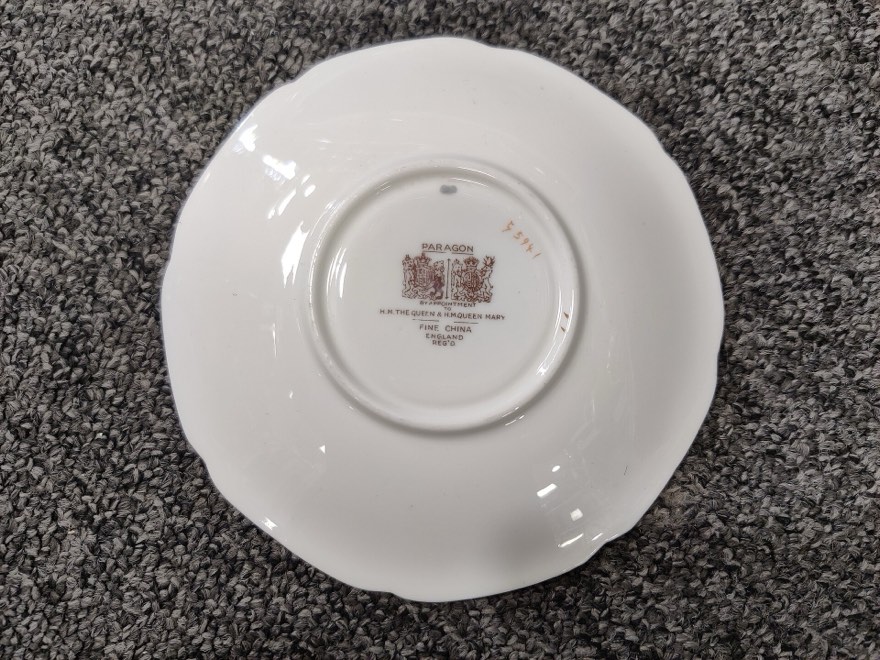

Everything starts with the backstamp, the mark on the underside of a plate or saucer. It usually names the maker, and often the pattern name or number too. Use a dinner plate if you can, because small pieces and serving dishes are sometimes marked less fully.
- Maker. A name such as Lenox, Noritake, Royal Doulton, Wedgwood, Haviland or Spode tells you where to start. For help reading older or unusual marks, see how to identify pottery and porcelain marks. For Wedgwood in particular, see how to date and check Wedgwood marks, and for Noritake, how to read and date Noritake backstamps.
- Pattern name or number. Two sets from the same maker can be worth very different amounts, so the pattern matters more than the name. Write down every word and number in the mark.
- No pattern name? Replacements, Ltd., a large china dealer in North Carolina, keeps a database of more than 475,000 patterns and lets you search with a photo. You can also compare your plate's rim, border and colours with sold listings from the same maker.
Words like "fine china" or "fine porcelain" on a backstamp don't tell you much on their own. They describe the type of body, and some makers even used them as a brand name, such as Fine China of Japan.
Is it bone china, porcelain or stoneware?
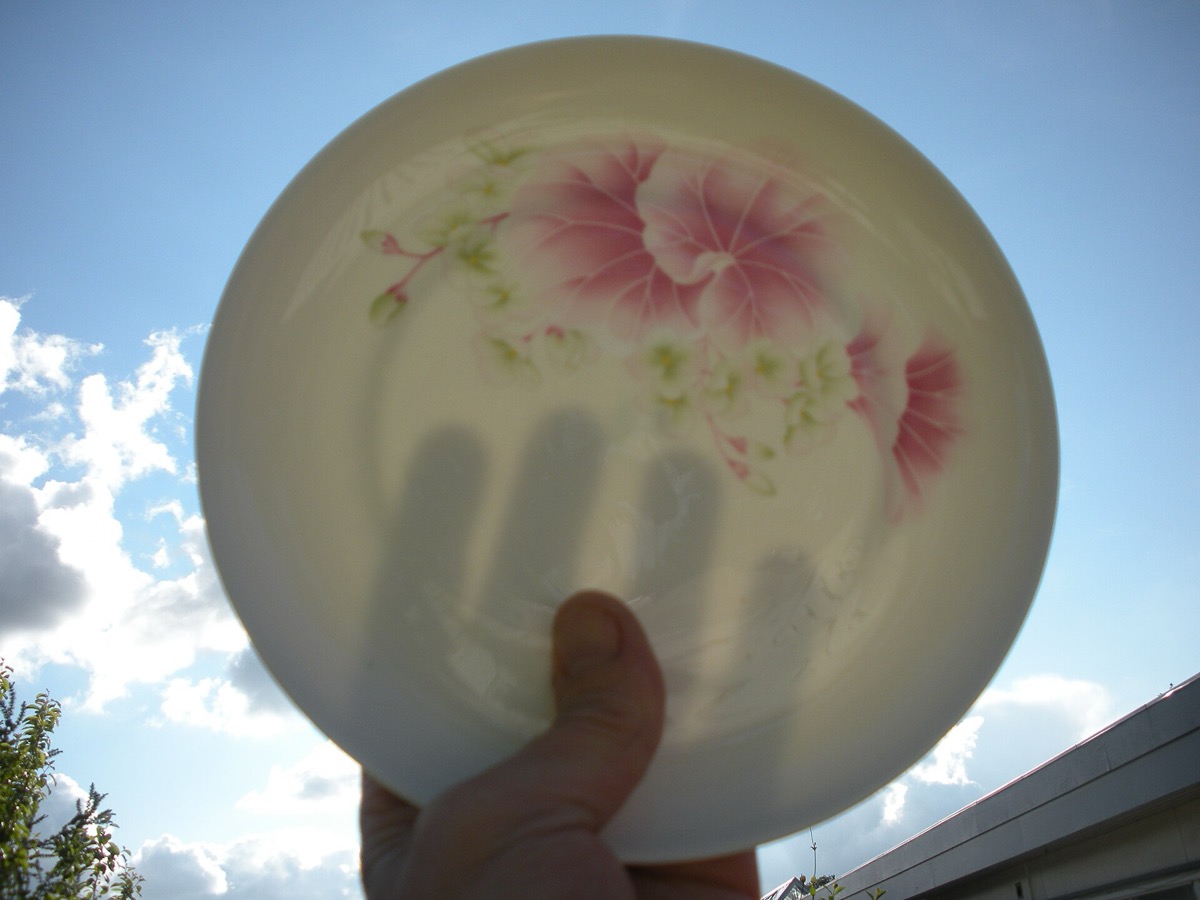

Most sets people call "china" are one of three things:
| Type | How to recognise it |
|---|---|
| Bone china | Thin, warm white and very translucent: hold it up to a light and you will see the shadow of your fingers through it. Often marked "bone china" or "fine bone china". |
| Hard-paste porcelain | White, hard and glassy, translucent where it is thin. Much continental European and Asian tableware, and most china marked "porcelain". |
| Stoneware and earthenware | Thicker, heavier and opaque: no light passes through. Everyday dinnerware, often marked "ironstone" or "stoneware". |
Bone china gets its translucency from bone ash in the clay. The Maryland Archaeological Conservation Laboratory dates its development to Josiah Spode in the 1790s, and within about ten years it had become the standard English porcelain. Two facts from the same source help with dating:
- A mark that includes the words "bone china" dates the piece to the 20th century. Earlier bone china is often unmarked.
- American bone china, such as Lenox, began around 1900.
Bone china is stronger than hard-paste porcelain and chips less easily, but its glaze tends to craze, and cracks in it often stain brown. Being bone china doesn't make a set valuable by itself; plenty of it was made.
What makes some china worth more
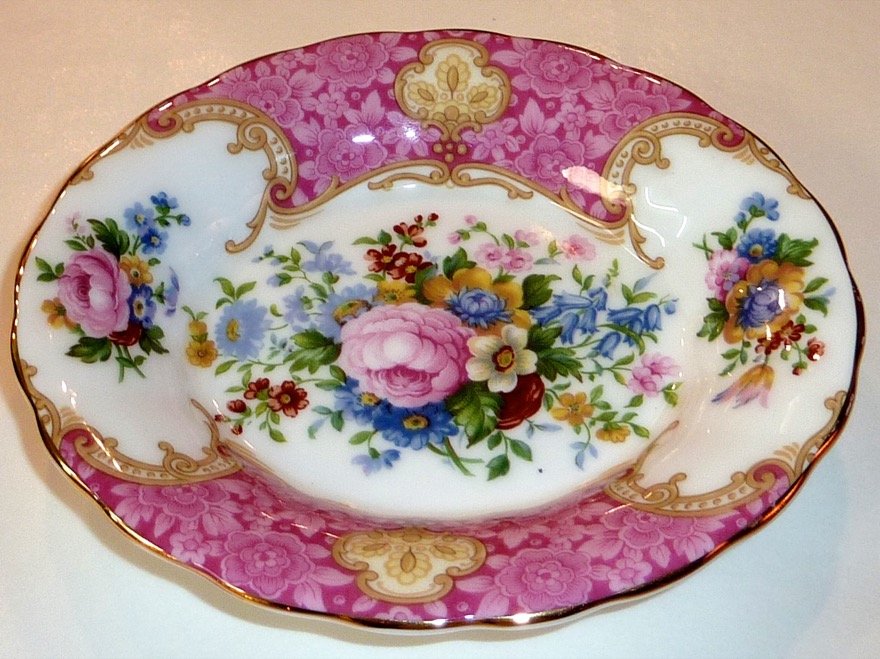

- Maker and pattern. Patterns collectors still want to use or complete sell; common ones from the same maker often don't.
- Age and decoration. Older pieces, hand painting and fine gilding count for more than a modern printed pattern. Early or unusual pieces, and Asian porcelain, deserve a specialist's look.
- Condition. Chips, cracks, crazing, worn gold edges and faded patterns from dishwashers all lower the price. Hold each piece up to the light and run a finger round the rim.
- Completeness. Lids for teapots, sugar bowls and tureens, and matching saucers for cups, matter. A serving piece without its lid sells for much less.
- Demand for replacements. People who already own a pattern often buy single pieces to replace breakages, which is why a discontinued pattern can sell piece by piece when a whole set won't.
Check before you eat off it
Some old glazes contain lead. The US Food and Drug Administration says there is no known safe level of lead exposure, and lists antique pottery, damaged or heavily worn pieces, and pieces of unknown origin among the kinds most likely to be a problem. Factory-made everyday tableware is much less likely to be. If you plan to use old china for food, the FDA suggests a lead-test kit from a hardware store, and advises against using any piece that tests positive or carries a "Not for Food Use" warning. Washing or boiling doesn't remove lead.
Rather check yours from a photo? Worthzy identifies the piece, screens it for fakes and shows a price range from matching listings, in seconds.
Get Worthzy on the App StoreWhat china sells for
There is no single price for china. The same maker can have patterns that sell readily and patterns nobody is looking for, so a general figure would mislead you more than it helps. What a set is worth is what the same pattern has actually sold for recently, in similar condition.
- Search eBay for the maker and the exact pattern name, then filter by Sold Items. Asking prices tell you what sellers hope for, not what buyers pay.
- Look at prices per piece and per place setting as well as for whole sets. Many sellers break sets up because individual pieces sell to people replacing breakages.
- Check what replacement dealers charge for your pattern. That shows which pieces are in demand, but it is a retail price. Any dealer that buys from you has to leave room to resell, so its offer will be well below its own price.
- For hand-painted, early, Asian or otherwise unusual pieces, ask a ceramics specialist at an auction house before selling.
Where to sell it
- Replacement dealers such as Replacements, Ltd. buy patterns they need from individuals. Ask for an offer in writing before you ship anything.
- eBay and online marketplaces suit patterns with steady demand, sold by the piece or place setting. Pack each piece separately.
- Local auctions, estate sales and consignment shops take whole sets, though often at low prices.
- Family or donation may be the best home for a common set. If you are clearing a whole house, how to value inherited antiques covers what to sort out first.
Sources
- Bone China: Diagnostic Artifacts in Maryland, Maryland Archaeological Conservation Laboratory
- Questions and Answers on Lead-Glazed Traditional Pottery, US Food and Drug Administration
- Lead in Food and Foodwares, US Food and Drug Administration
- Inheriting the fine china? Many younger folks say no thanks, Associated Press, via Boston.com
- North Carolina business putting together family histories through china collections, WBTV
Related guides
Not sure what your china is?
Photograph a plate from the front and a close-up of the backstamp. Worthzy identifies the maker and pattern where it can, values it from comparable listings, and says so when a photo can't settle it.
Get Worthzy on the App StoreWorthzy gives estimates and an authenticity screening, not a certified appraisal. For anything valuable, have a qualified specialist examine it in person.