Wedgwood marks: how to date and check your piece
Check the name first
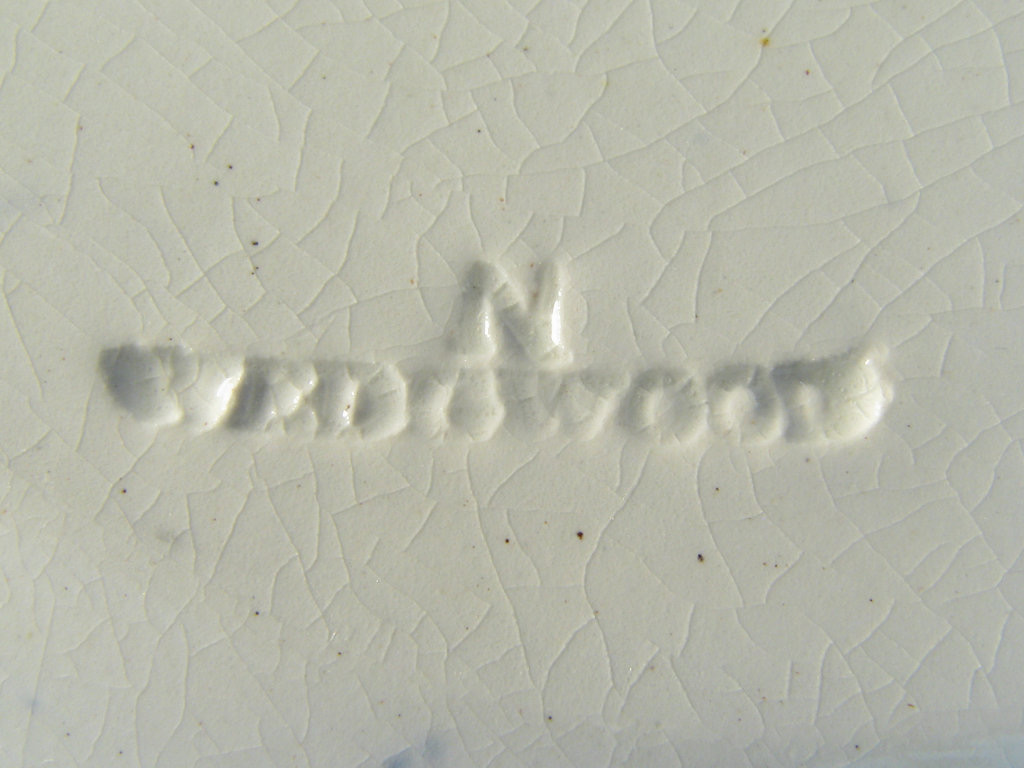

Josiah Wedgwood founded his pottery in Burslem, Staffordshire, on 1 May 1759, and he was the first potter of note to mark his wares with his own name. Because the name sold, other firms used it or something close to it. Before you date a piece, read the spelling letter by letter:
| Mark | Who made it | When |
|---|---|---|
| WEDGWOOD, Wedgwood | Josiah Wedgwood and his successors | 1759 to today |
| WEDGWOOD & BENTLEY | Josiah Wedgwood with Thomas Bentley, on ornamental wares | 1769 to 1780 |
| WEDGEWOOD, VEDGWOOD, VEDGEWOOD | William Smith & Co., Stockton-on-Tees | About 1825 to 1855 |
| J. WEDG WOOD, with a gap in the name | John Wedg Wood, Burslem | 1840s and 1850s |
| WEDGWOOD & CO | Ralph Wedgwood, then Enoch Wedgwood's firm in Tunstall | 1790s; then from 1860 |
Wedgwood took William Smith to court, and in November 1848 won an injunction stopping him from marking his ware "Wedgwood" or "Wedgewood". Smith went on to use Vedgwood. Wedgwood & Co is a different case: Enoch Wedgwood ran a real pottery under that name, later Enoch Wedgwood (Tunstall) Ltd, and Josiah Wedgwood & Sons only took the name over in 1980. Its wares are genuine pottery, just not Josiah Wedgwood's, and they should be priced against Enoch Wedgwood sales; the table below includes one of its plates.
Wedgwood & Bentley marks are rare. Real ones were impressed or raised in the clay. The reference site thepotteries.org warns of a circular version added to unmarked pieces, soft enough to scratch off with a pin.
Date it from the words in the mark
Wedgwood's oldest mark is the name pressed into the clay before firing. Early ones were set letter by letter and look uneven; from about 1769 the name was stamped from a single block. Printed marks came later. The references disagree by a year or two on some of these dates:
| What you see | Roughly when |
|---|---|
| Impressed name with uneven or curved letters | About 1759 to 1769 |
| Impressed WEDGWOOD alone, even letters | 1769 onward; usually before 1891 if nothing else is with it |
| Printed name in red, blue or gold on porcelain | About 1812 to 1822, and rare |
| ETRURIA beside the impressed name | Around 1840 to 1845 |
| A three-letter code beside the name | 1860 onward (see the next section) |
| Printed Portland vase above WEDGWOOD, on bone china | From 1878 or 1879 |
| The same vase mark with three stars under the vase | From 1900 |
| ENGLAND | 1891 or later |
| MADE IN ENGLAND | In general use from 1908 or 1910 (references differ); on some pieces from 1898 |
| Impressed WEDGWOOD in plain letters without serifs | About 1929 onward |
| WEDGWOOD ENGLAND 1759 | Modern; 1759 is the founding year, not the date of your piece |
ENGLAND was added in 1891 so that exports to the United States carried a country of origin. The modern "England 1759" stamp is a trademark, not a statement of where a piece was made. From 2006, more and more Wedgwood tableware was made at a factory in Tangerang, Indonesia, and most production is there now. Those pieces often have no country in the printed mark and a removable "Made in Indonesia" label. They aren't fakes; they are modern.
Read the three-letter date code
From 1860, many Wedgwood pieces carry three small capital letters impressed near the name. The first is the month, the second identifies the potter who threw the shape, and the third is the year. Turn the piece so light falls across the base; impressed letters are easy to miss.
| Month | Letter | Month | Letter |
|---|---|---|---|
| January | J | July | V (1860 to 1863), L (from 1864) |
| February | F | August | W |
| March | M (1860 to 1863), R (from 1864) | September | S |
| April | A | October | O |
| May | Y (1860 to 1863), M (from 1864) | November | N |
| June | T | December | D |
The year letters started at O for 1860 and ran through the alphabet in four series, so each letter fits more than one year:
| Year letter | 1st series | 2nd series | 3rd series | 4th series |
|---|---|---|---|---|
| A | 1872 | 1898 | 1924 | |
| B | 1873 | 1899 | 1925 | |
| C | 1874 | 1900 | 1926 | |
| D | 1875 | 1901 | 1927 | |
| E | 1876 | 1902 | 1928 | |
| F | 1877 | 1903 | ||
| G | 1878 | 1904 | ||
| H | 1879 | 1905 | ||
| I | 1880 | 1906 | ||
| J | 1881 | 1907 | ||
| K | 1882 | 1908 | ||
| L | 1883 | 1909 | ||
| M | 1884 | 1910 | ||
| N | 1885 | 1911 | ||
| O | 1860 | 1886 | 1912 | |
| P | 1861 | 1887 | 1913 | |
| Q | 1862 | 1888 | 1914 | |
| R | 1863 | 1889 | 1915 | |
| S | 1864 | 1890 | 1916 | |
| T | 1865 | 1891 | 1917 | |
| U | 1866 | 1892 | 1918 | |
| V | 1867 | 1893 | 1919 | |
| W | 1868 | 1894 | 1920 | |
| X | 1869 | 1895 | 1921 | |
| Y | 1870 | 1896 | 1922 | |
| Z | 1871 | 1897 | 1923 |
To pick the right series, look at the rest of the mark:
- No ENGLAND: 1st or 2nd series, up to 1890. The same code can still fit two years 26 years apart.
- ENGLAND with the code: 1891 or later, so the late 2nd series or the 3rd.
- A 3 in place of the month letter: 1907 to 1923. A 4 means 1924 or later.
- Two numbers instead of a year letter: 1929 or later; 30 means 1930.
For example, TOT reads June, potter O, year T: June 1865 if there's no ENGLAND, June 1891 if there is. A lone letter, like the N in the photo above, isn't a date. Small modern items don't always follow the rules: Christmas thimbles dated 1990 still read WEDGWOOD ENGLAND.
Clues when there's no date code
- Jasperware colour. Wedgwood has made jasper continuously since 1775, so colour only helps on a piece marked WEDGWOOD alone, with no code or ENGLAND. On those, solid black jasper was made from 1778 to about 1826. Pale blue points to 1775 to 1826, and a dark blue to before 1820. Green and solid white jasper came back in 1844.
- Bone china. Wedgwood made bone china from 1812 to about 1822 (one reference says 1830), then not again until 1878. Early Wedgwood bone china is rare.
- Majolica. Wedgwood made majolica from 1860 to 1940.
- Fairyland Lustre. Designed by Daisy Makeig-Jones and launched in 1915. The pieces in the sales below carry painted pattern numbers beginning with Z, such as Z4968, Z5125 and Z5360.
Wedgwood sometimes used old stock and mixed its marks, so treat any date as a guide and check more than one clue.
Rather check yours from a photo? Worthzy identifies the piece, screens it for fakes and shows a price range from matching listings, in seconds.
Get Worthzy on the App StoreWhat Wedgwood sells for
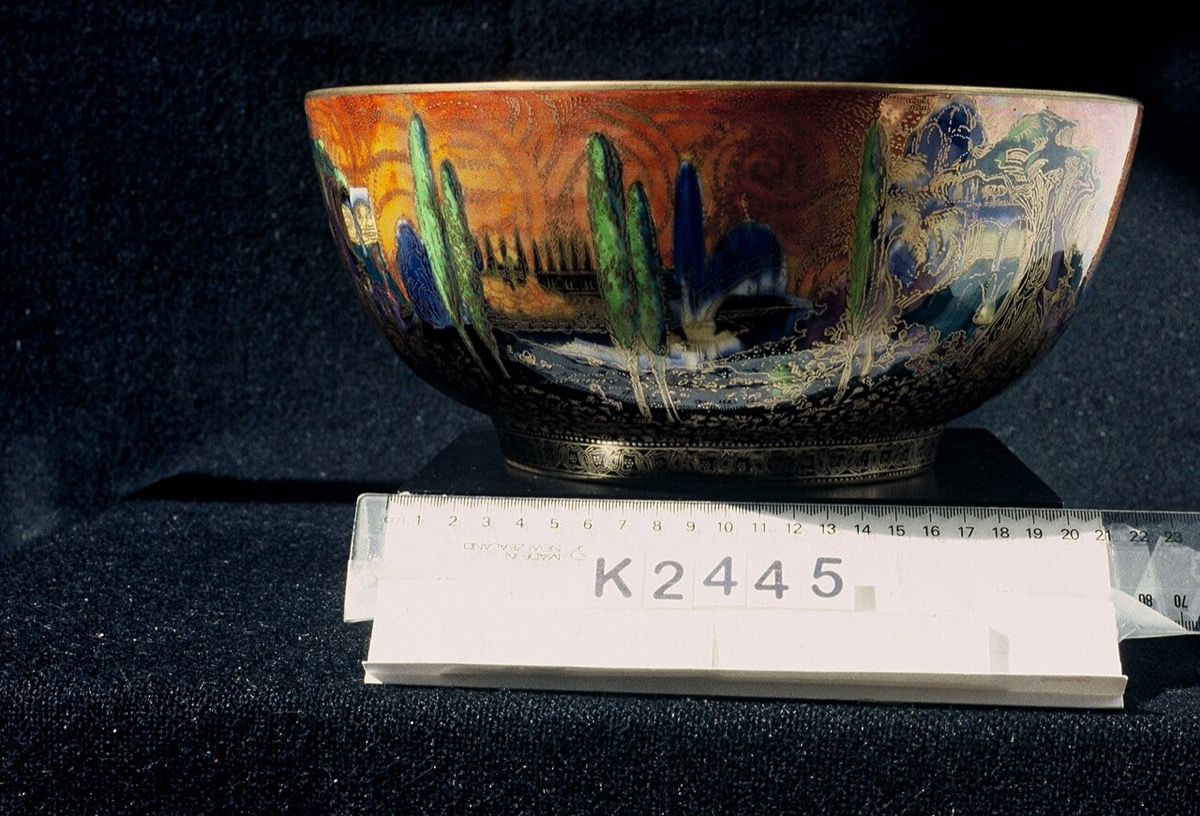

Everyday jasperware sells for a few tens of dollars. These are typical eBay sold prices gathered by the price tracker Underpriced AI on pages updated between July and October 2026. We couldn't check them against eBay directly, so treat them as a guide.
| Piece | Typical sold | Range | Sales |
|---|---|---|---|
| Pale blue jasperware Muses and Pegasus trinket dish | $20 | $5 to $795 | 46 |
| Sage green jasperware miniature plate, 4.5 inches | $23.95 | $5.50 to $374.95 | 140 |
| Jasperware Christmas ornament, "Dressing the Tree" | $27.90 | $7.72 to $155 | 100 |
| Enoch Wedgwood (Tunstall) Blue Heritage dinner plate, not Josiah's | $13.50 | $3 to $45 | 43 |
The wide ranges are typical: one dish in a run of $20 sales can bring far more for its age, colour or condition, so compare yours with sold ones that match.
At auction, the money goes to 18th-century pieces and above all to Fairyland Lustre:
| Piece and mark | Sale | Result |
|---|---|---|
| Fairyland Lustre "Dragon King" vase, Z4968 | Woody Auction, Kansas, 22 March 2025 | $87,500 with premium |
| Fairyland Lustre "Ghostly Woods" vase, 13¾ inches | Woody Auction, 22 March 2025 | $43,000 with premium |
| Fairyland Lustre Malfrey pot, Z5360 | Woody Auction, 22 March 2025 | $9,500 |
| Fairyland Lustre octagonal bowl, gilt Portland vase mark, Z5125 | Toovey's, 10 August 2017 | £2,400 hammer |
| Fairyland Lustre bowl, printed WEDGWOOD ENGLAND, Z4968 | Bonhams, London, September 2025 | £2,176 with premium |
| Wedgwood & Bentley black basalt vase, about 1775; cover missing, base damaged | Woolley & Wallis, 13 September 2016 | £550 |
The Ghostly Woods vase sold far above its high estimate of $5,000. Fairyland Lustre prices swing that much from sale to sale, which is why a specialist should see any piece before you sell it.
How to check what yours sells for
- Write down every word, letter and number in the mark, and the colour and type of ware: jasper, basalt, Queen's ware (cream-coloured earthenware) or bone china.
- Search eBay for the line, colour and shape, for example "Wedgwood sage green jasperware plate", and filter by Sold Items. Ignore asking prices.
- Compare pieces of the same size and similar condition. Check sold photos for chips, cracks and worn gilding.
- For Fairyland Lustre, anything marked Wedgwood & Bentley, or a piece you think is 18th-century, look up past results from British auction houses and ask a ceramics specialist before you sell.
- Other makers' marks are in our guide to pottery and porcelain marks, and a full dinner service is covered in is my china worth anything?
Sources
- Dating Wedgwood's Ceramics, thepotteries.org
- Ceramic Trade Marks: Josiah Wedgwood, thepotteries.org
- Misleading Wedgwood marks, thepotteries.org
- William Smith & Co, Stockton-on-Tees, thepotteries.org
- Indeterminate branding: Wedgwood England 1759, thepotteries.org
- Wedgwood Marks Guide, Potteries Auctions
- Wedgwood, Wikipedia
- Wedgwood pale blue jasperware Muses & Pegasus trinket dish sold price guide, Underpriced AI
- Enoch Wedgwood (Tunstall) Blue Heritage dinner plate sold price guide, Underpriced AI
- Pair of Wedgwood vases marked Fairyland Lustre combine for $130,000 at Woody Auction, Artdaily
- Wedgwood vase, marked, $87,500, Woody Auction, Journal of Antiques & Collectibles
- Wedgwood Fairyland Lustre octagonal bowl, lot 1455, Toovey's
- Fairyland Lustre bowl, Poplar Trees / Woodland Elves V, circa 1925, Bonhams
- A large Wedgwood and Bentley black basalt vase c.1775, lot 212, Woolley & Wallis
Related guides
Have a piece of Wedgwood?
Photograph the whole piece and a sharp close-up of the mark on the bottom, with light from the side so impressed letters show. Worthzy reads the mark and identifies the line where it can, values it from comparable listings, and says so when a photo can't settle it.
Get Worthzy on the App StoreWorthzy gives estimates and an authenticity screening, not a certified appraisal. For anything valuable, have a qualified specialist examine it in person.