Wheat penny value: which ones are worth money
What makes it a wheat penny
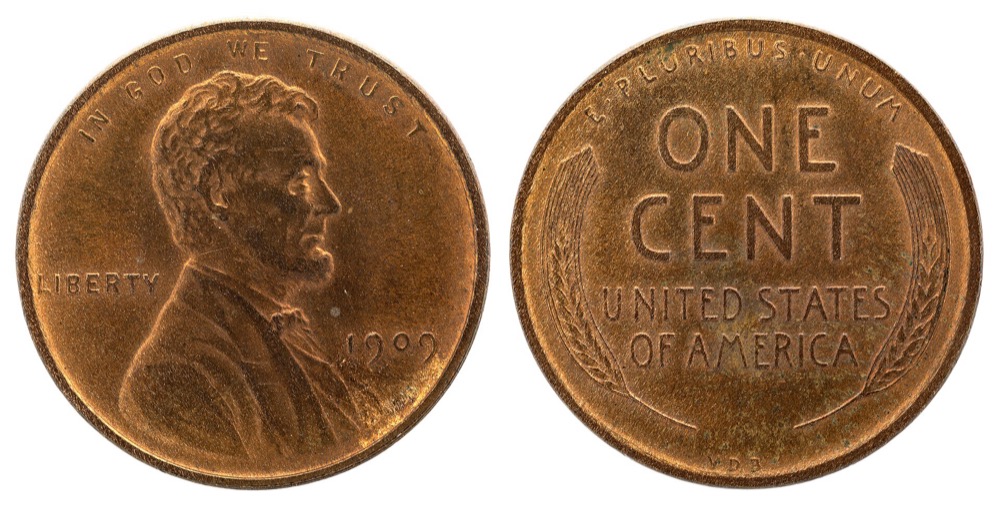

Turn it over. Two stalks of wheat on the back mean it's a Lincoln wheat cent, struck from 1909 to 1958. The Lincoln Memorial replaced the wheat in 1959. Don't clean it, because even a gentle rub leaves marks collectors can see and can cut the value sharply.
Three things that decide the value
- Date. It's to the right of Lincoln's portrait. Wear can hide it, so use good light and a magnifier.
- Mint mark. Look for a small letter below the date. D is Denver, S is San Francisco and no letter is Philadelphia.
- Condition and colour. Grades run from worn to Mint State (MS), and the colour counts as well. Collectors use Red, Red-Brown and Brown, and NGC calls a coin Red when at least 85% of its original red lustre survives. The same date can sell for many times more in a higher grade.
Key dates to look for
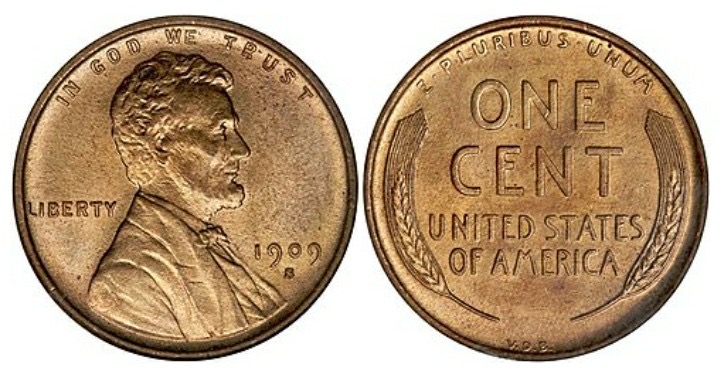

These are the dates and mint marks collectors look for first. A low mintage is a good sign, but it isn't the whole story. Collectors saved the famous 1909-S VDB and largely spent the 1914-D, so high-grade 1914-D cents are the harder coin to find.
| Coin | Struck | What to check |
|---|---|---|
| 1909-S VDB | 484,000 | S below the date, and V.D.B. at the bottom of the back, centred below the wheat |
| 1909 VDB | Almost 28 million | No mint mark, V.D.B. on the back. Far more common than the S |
| 1914-D | 1,193,000 | D below the date, and no V.D.B. on the shoulder |
| 1931-S | 866,000 | S below the date |
| 1922 "No D" | From a Denver mintage of 7,160,000 | No mint mark, or a very faint one, on a 1922 cent |
The initials were taken off the back within days of the coin's release in August 1909. They returned in 1918, much smaller, on Lincoln's shoulder. A V.D.B. on the shoulder of a coin dated before 1918 is a warning sign.
Errors and varieties worth knowing

- 1922 "No D". All 1922 cents should come from Denver. Polishing a damaged die removed or hid the D on some coins. The one collectors want most is Die Pair 2, the "Strong Reverse", which has no D at all and a sharp back. A weak D, or a weak back, sells for much less. Look for a strong second 2 in the date.
- 1955 doubled die. About 40,000 were struck, and about 24,000 reached circulation. Look for wide, obvious doubling on the date, LIBERTY and IN GOD WE TRUST, with clear separation between the images. Flat, shelf-like doubling usually comes from machine doubling, which adds little.
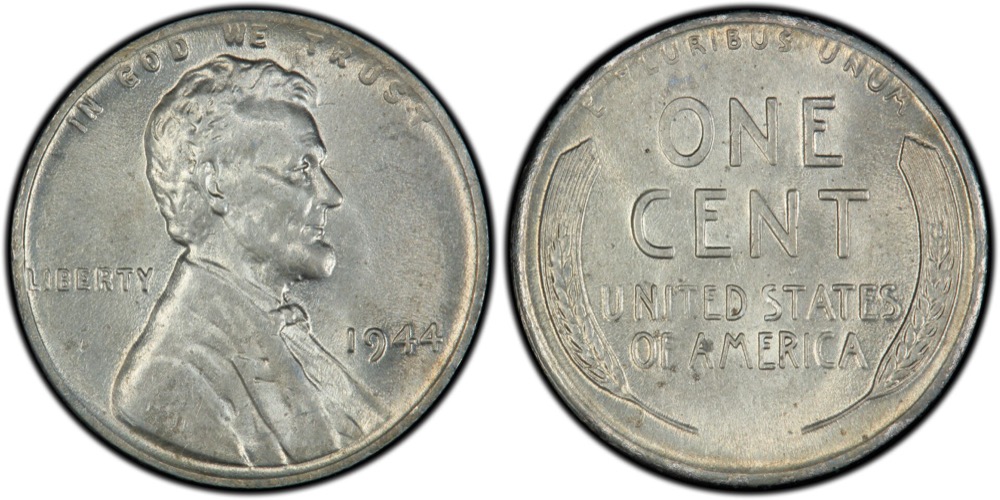
- 1943 bronze. The 1943 cent was made of zinc-coated steel, so it looks silver and sticks to a magnet. A few were struck in bronze by mistake. An estimated 40 were made, and 27 are confirmed.
- 1944 steel. A few 1944 cents were struck on steel blanks left over from 1943. These are the reverse of the 1943 error, so a magnet is the first check.
Ordinary 1943 steel cents are common. Some have been stripped and replated to look new, so a bright one isn't necessarily uncirculated.
How to spot a fake or altered coin
The most valuable wheat pennies are also among the most faked, and many fakes start as real, cheap coins.
- 1909-S VDB. NGC regularly sees a real 1909 VDB with an S added, as well as outright counterfeits. It also sees real 1909-S cents with V.D.B. added.
- 1914-D. A D may be added to a Philadelphia 1914, or a 1944-D may have its date altered. A V.D.B. on the shoulder gives away the 1944-D, because a genuine 1914-D has none there.
- 1922 "No D". Some sellers remove the D from an ordinary 1922-D, or sell a weak D as a No D.
- 1943 bronze. A copper-plated steel cent sticks to a magnet, so that test catches plating. It can't catch a 1945, 1948 or 1949 cent with an altered date, because those are bronze. A real bronze cent should weigh about 3.11 g, and a steel one about 2.7 g.
- 1955 doubled die. PCGS has documented counterfeits that imitate some genuine die markers.
You can't settle any of these at home. If a coin looks right and matters, send it to an independent grading service such as PCGS or NGC, or show it to a reputable coin dealer, before you rely on it. Scratches, dents and stains from life in a pocket aren't errors and add nothing.
Rather check yours from a photo? Worthzy identifies the piece, screens it for fakes and shows a price range from matching listings, in seconds.
Get Worthzy on the App StoreWhat wheat pennies sell for
These are real auction results, and most of them are for much better coins than you'll find in a jar. Grade changes the price a lot, so compare yours with a coin in a similar grade.
| Coin | Grade | Sold for | When |
|---|---|---|---|
| 1909-S VDB | XF40 | $1,200 and $1,320 | April 2023 |
| 1909-S VDB | MS65 Red | $7,625 | October 2026 |
| 1914-D | MS64 Red | $11,895 | October 2026 |
| 1922 Weak D | MS64 Red-Brown | $660 | May 2023 |
| 1922 No D, Weak Reverse | MS63 Red-Brown | $3,600 | June 2022 |
| 1922 No D, Strong Reverse | AU58 | $8,400 | October 2018 |
| 1922 No D, Strong Reverse | MS64 Red-Brown | $72,000 | January 2024 |
| 1955 doubled die | AU55 | $2,379 | September 2026 |
| 1955 doubled die | AU58 | $3,416 | May 2026 |
| 1955 doubled die | MS64 Red | $21,960 | January 2026 |
| 1943 bronze | Not stated | $204,000 | 2019 |
| 1944-S steel | Not stated | $373,750 | August 2008 |
A mint-condition Denver 1943 bronze cent is reported to have sold for over $1.7 million in 2010. At the top of the market, condition can matter as much as the date. In the same October 2026 sale, a 1930-D brought $9,760 and a 1911 brought $8,845, both graded MS67 Red. That doesn't make every 1930-D or 1911 valuable, because those prices depend on a near-perfect grade that a coin from a jar won't have.
We couldn't verify dated sale prices for circulated 1914-D, 1931-S or 1909 VDB cents, or for ordinary dates, so they aren't listed here. To check one yourself, search eBay for the exact date and mint mark and filter by Sold Items. Asking prices only show what sellers hope for, and a graded coin's price says little about an ungraded one. Our guide to what old coins are worth covers the same checks for other coins.
What about the copper?
Every wheat penny except the steel ones is about 95% copper and weighs 3.11 g when new, which is about 0.0065 lb of copper. Multiply that by the day's copper price per pound to get a rough figure for the metal. It's a reference point, not an offer. US rules bar melting one-cent coins, with limited exceptions, so sell them as coins. Ordinary dates usually change hands in rolls or by the bag. Search the rolls for the coins above first. If you've inherited a whole collection, how to value inherited antiques explains what to do first.
Sources
- 140-Coin Lincoln Cent Collection Tops $309K at Auction, CoinNews
- The Key Date 1909-S V.D.B. Lincoln Cent Value Keeps Going Up, CoinWeek
- As the Penny Era Ends, This 1955 Lincoln Cent Still Sells for Six Figures, CoinWeek
- 1922-D Lincoln Cent: A Collector's Guide, CoinWeek
- Combination of a missing Mint mark and a strong reverse tricky to authenticate, Coin World
- Counterfeit Detection: Authenticating 1909-S VDB Lincoln Cents, Numismatic Guaranty Company
Related guides
Found a wheat penny worth checking?
Photograph both sides, with the date in focus. Worthzy identifies the coin, reads the date and mint mark where it can, and shows a value range from comparable listings. A coin that might be rare still needs checking in person.
Get Worthzy on the App StoreWorthzy gives estimates and an authenticity screening, not a certified appraisal. For anything valuable, have a qualified specialist examine it in person.